
Learnings from The Txokos of Hackney
By Luc Cadwaladr-Evans, Eat Club Young Leader
It isn’t just what they eat in the Basque country that makes it a culinary capital of the world, it’s also how they eat. This idea was the focus of a recent series of supper clubs, devised by UCL post-grad student Patricia de la Osa and delivered with London food education charity Eat Club across the month of July – the Txokos of Hackney. As one of Eat Club’s Young Leaders I was given the opportunity to help organise and be present for all of these Basque-inspired events. I’d like to let you in on the community that was built in Upper Clapton over the past month.
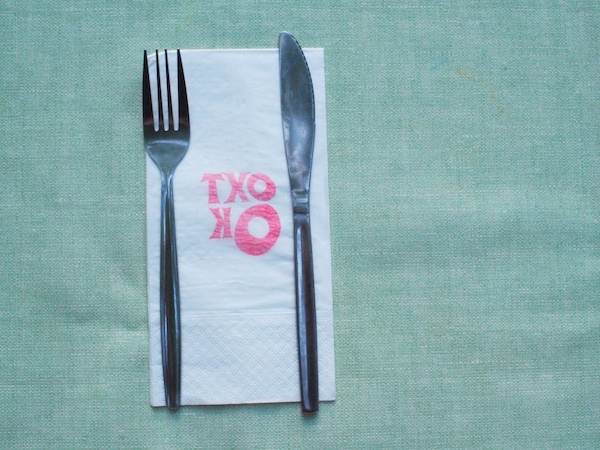
In the Basque country, the txoko (meaning “nook” or “cosy spot” in Basque) is a gathering of locals, friends and neighbours, to cook and eat together. Beyond straddling the border of France and Spain; Basque Txokos also straddle the line that separates public and private. It is in this unique social location that communities develop. At a time of such emphasis on the importance of the greatly diminished social ‘third space’ (that isn’t a pub or bar) Patricia set out to find out if the culinary communities of Basque villages could still grow in the heart of London, and to demonstrate that a communal mode of eating can change the way we understand meal time. This endeavour would serve as my introduction to organising and hosting supper clubs with Eat Club.
If you aren’t familiar with Made In Hackney, it’s a wonderful plant-based community kitchen and cookery school located in the beautifully restored Liberty Hall on Clapton Common. This was to be the setting of Hackney’s Txokos. The kitchen initially felt more than a little cramped for the twenty-odd people who had congregated to cook, eat and get to know one another. But as everyone started to become more familiar with the space, their cooking roles and each other, the group of strangers quickly became a cohesive team.
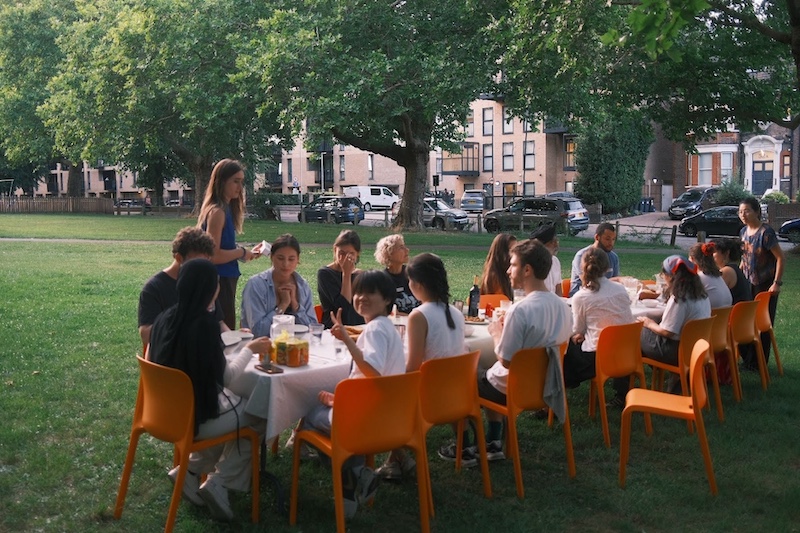
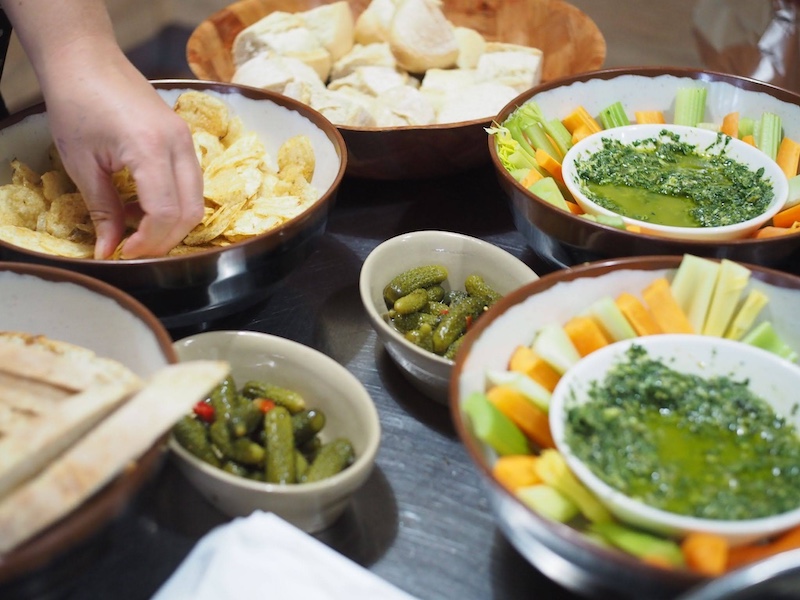
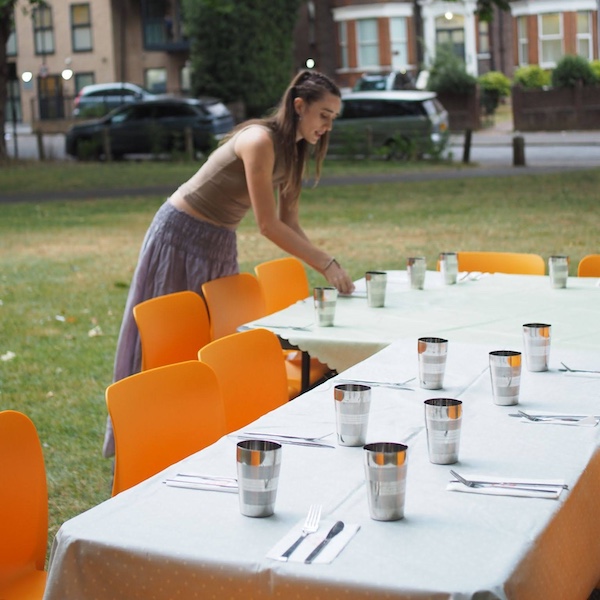
We moved tables and chairs out onto the common, and by the time everyone was sitting and the food was out I felt as though I could already call these people my friends. A solidarity had been built over the course of the evening around the shared labour over the meal, and it was celebrated with platefuls of Basque-inspired delights: charred padron peppers; breaded gordal olives; little bowls of strawberry and watermelon gazpacho; and plenty more. It was past 9 pm as we continued to eat, the sun continued to shine through the park and the air still held the day’s warmth in it. The dishes weren’t all perfect; the slow cooked beans (much to my own chagrin, having soaked them myself the night before) still had more than a little bite to them, but this in no way impeded the group’s enjoyment. If anything, any shortcomings of our first meal together prompted discussion on what dishes might be cooked up the next week, and how to avoid repeating similar mistakes with them.
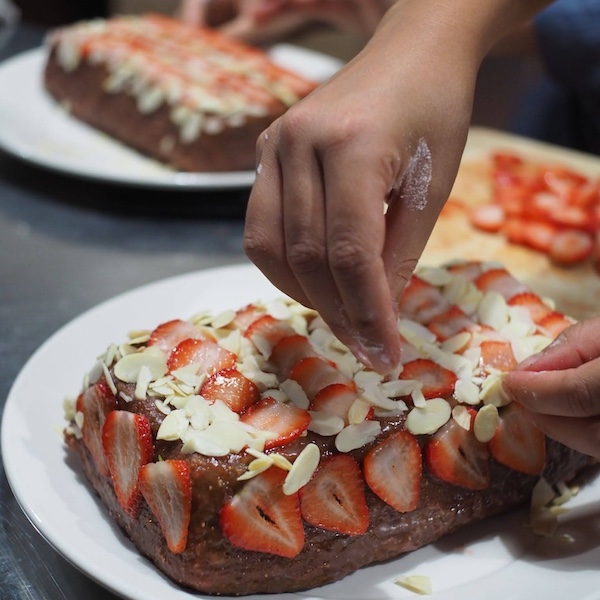
The group collectively devised feasts to be made using the ingredients we knew we had, and assigned individuals the responsibility of different courses, and in doing so they relieved from my shoulders the weight of creating the first night’s menu and recipes. Soon enough, discussion over recipes and their feasibility took to our group chat, and dishes manifested days later in the kitchen. A rich lentil bolognese, tacos with an amazingly savoury mushroom-based filling, and a delicate courgette and ‘ricotta’ tart – all delicious, all plant-based. Fresh salads, slaws and salsas accompanied our dishes, making improvisational use of excess fruits, vegetables and herbs. Desserts were just as exciting. A creamy rice pudding with a sweet and tart berry compote, a perfectly moist coconut and strawberry sponge cake and a ridiculously tasty Carlota de Limón. These I found completely boggling for the fact that they too, were entirely vegan.
 .
. 
Everyone learned to bring tupperware to take the heaps of leftovers home, but as the golden-hour banquets progressed we also learned to better estimate the correct quantities of ingredients to feed everyone without generating a mountain of surplus food. By the time of the final gathering we had gotten to know each other, but beyond this we had learned how to cook for each other. I was particularly impressed with a silken tofu and gram flour-based Spanish tortilla which impossibly emulated the taste and texture (though Patricia might disagree with the authenticity) of the real thing. The heat of the previous weeks had somewhat relented and for the first time the sun had set completely while we enjoyed our sobremesa (the Spanish cultural tradition of remaining at the table after a meal to savor the company and conversation of others). Nevertheless the flow of conversation was interrupted only by occasional roars of laughter.
As we migrated back into the kitchen to clean up for the last time I caught myself wistfully wishing that this series of celebrations could have gone on for longer. I couldn’t – and I still can’t – imagine a better way to pass summer evenings in London.. I cannot speak to this project’s research yield, but I do know that I could not have asked for a more enjoyable introduction into the world of supper clubs, and I could not have anticipated the community that I would get to watch grow. If, and I sincerely hope this is the case, the idea of participating in events like these appeals to you, then do keep an eye on Eat Club – we are keeping our fingers crossed that Hackney has not seen its last txoko.